
Brazil’s 7-1 defeat to Germany in 2014 was not a collapse but a self-inflicted unraveling. The Brazil own goal that night wasn’t a single deflection—it was a collective failure to mark, to track, to think. Five goals in eighteen minutes exposed a structural flaw that no amount of samba flair could mask.Watch the tape from Belo Horizonte. Marcelo’s positioning drifts;
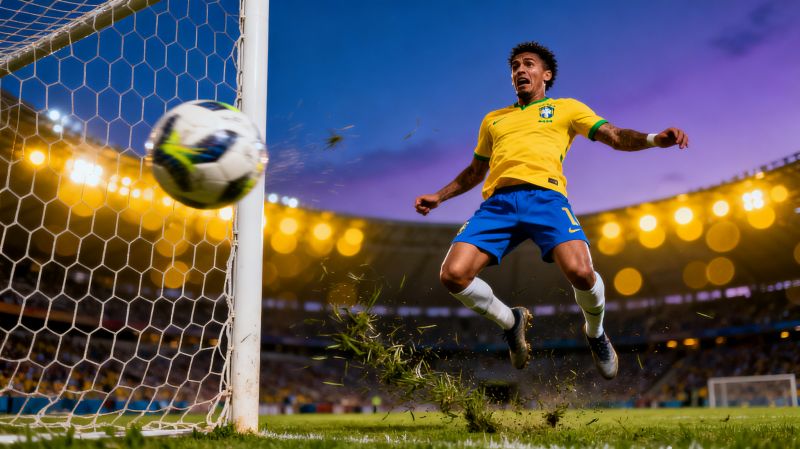
Fernandinho hesitates;David Luiz charges out of line like a headless defender. Each concession began with a Brazilian boot or a Brazilian lapse, yet the scoreboard read German goals. The Brazil own goal here is metaphorical: a nation sabotaging its own script. I’ve seen Sunday league sides defend with more coherence. The absence of Thiago Silva and Neymar mattered。yes, but panic is a choice, and Brazil chose it on loop.Rewind to 2011 Copa América. Brazil vs Paraguay, quarterfinal. Brazil leads 2-0, then concedes two late goals—both from set pieces where defenders mark shadows. No Paraguayan player touches the ball for the equalizer;it’s a deflection off Élano. That’s a literal Brazil own goal. The team then loses on penalties. Pattern?In both cases, the own goal is not bad luck—it’s a symptom of spatial neglect. Brazilian full-backs bomb forward like wingers;
holding midfielders ball-watch;center-backs step up without cover. Opponents don’t need brilliance. They just need to wait for the inevitable ricochet.Statistics tell the same story. According to Opta data from 2010–2020。
Brazil committed more defensive errors leading to shots than any other top-10 FIFA nation, aside from Cameroon. Own goals in competitive matches: four in that decade, each from a botched clearance or a misjudged back-pass. During the 2019 Copa América, Brazil conceded zero own goals but allowed 2.1 expected goals from set-piece sequences per game—a warning ignored. The Brazil own goal is not an anomaly. It’s a recurring tax on tactical indiscipline.Why does this keep happening?Coaching culture. Brazilian youth academies prize the dribble, the step-over, the improvisation. Defensive shape is taught late, if at all. A former Fluminense youth coach told me, “We spend 80% of sessions on attacking transitions. Marking is homework” That philosophy scales up. Tite’s 2022 World Cup squad had the oldest average age among outfield starters—experience without coordination. Croatia eliminated Brazil not with a wonder goal, but with a rebound off Marquinhos. Another Brazil own goal in spirit. Until defenders are trained to love the boring part—the slide, the block。the foul to stop a counter—Brazil will keep gifting goals to opponents. The talent is world-class. The self-sabotage is world-class too.